
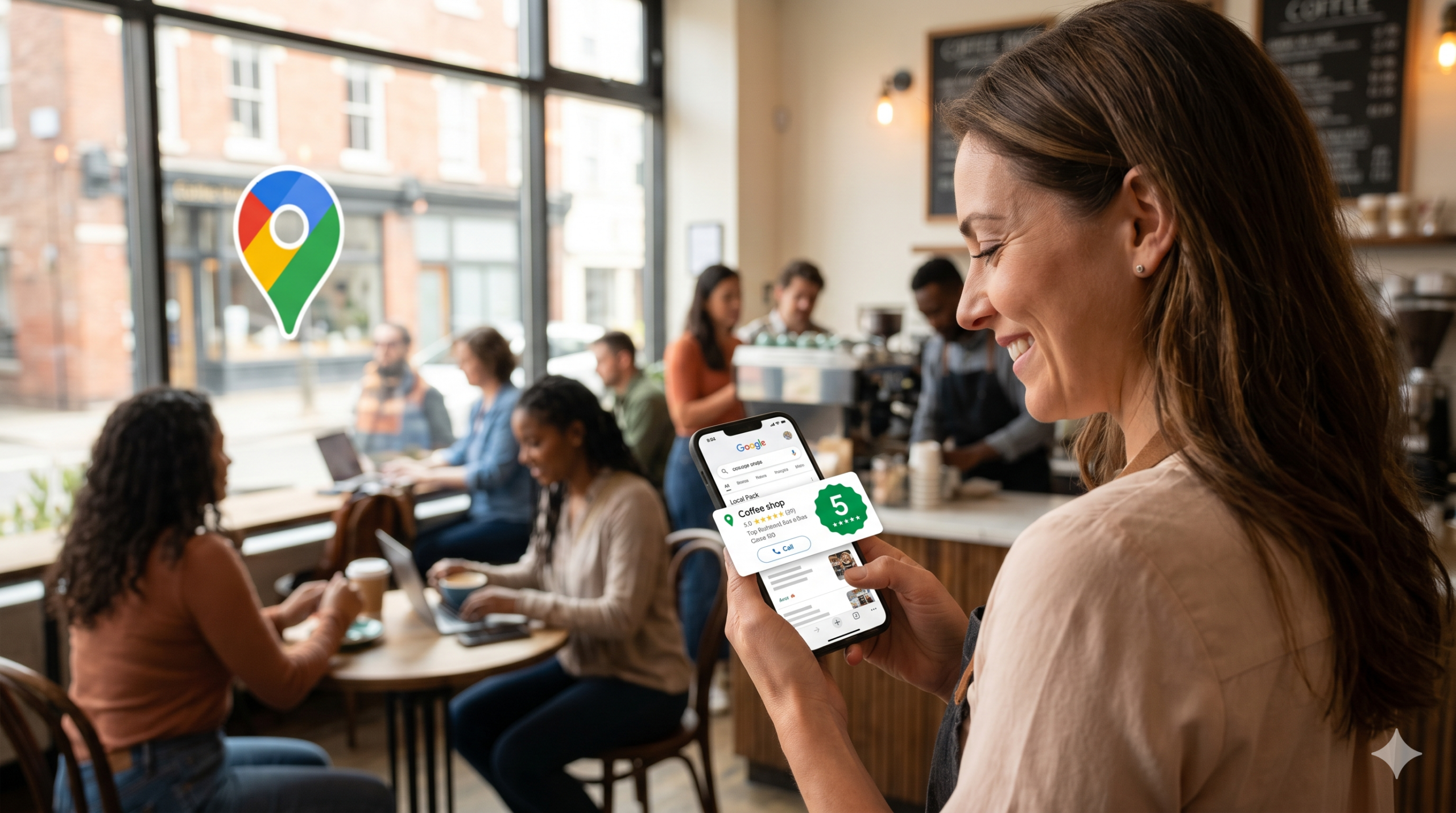

Ever yanked your smartphone out, typed “best coffee near me,” and blindly tapped one of those top three map spots? Sure you have. That’s the Google Local Pack doing its magic. For business owners, I can tell you right now – it’s maddening. You might pour your soul into an incredible product or service. Yet, without that map visibility, foot traffic stalls. Crickets. Why? Because you’re buried on page two.
We crave convenience. It rules our lives. When locals desperately need a leaky pipe fixed, a custom cake baked, or a quirky boutique to browse, they don’t open the Yellow Pages. They ask Google. Those top three map-adjacent slots – fondly dubbed the “Local Pack” or “Map Pack” – are pure digital gold. Claiming one of those spots alters the trajectory of your revenue. Seriously. I’ve witnessed mom-and-pop shops teetering on the edge of bankruptcy suddenly booked solid for half a year, purely because they cracked the local search code.
Today, we’re peeling back the curtain. I’m taking you step-by-step through the gritty, actionable tactics we use to conquer local search. So, brew a strong cup of coffee. Let’s dissect this masterclass on Local SEO and get your brand firmly planted in that coveted three-pack.
1. Claim and Fully Optimize Your Google Business Profile
Listen closely. If you ignore everything else in this guide, remember this single truth: your Google Business Profile (the artist formerly known as Google My Business) is your bedrock. Treating it like a digital afterthought? Massive blunder. First order of business: claim the listing. Stamp your name on it. Once the keys are in your hand, flesh out every conceivable detail.
Don’t just slap up a name and address and call it a day. Dig deeper. Pinpoint the absolute most accurate primary category, then sprinkle in relevant secondary ones. Craft a punchy, keyword-laced bio that paints a vivid picture of your brand. Nail down your operating hours. Got weird holiday schedules? Update those, too! Nothing infuriates a would-be buyer more than driving across town because Google swore you were open, only to yank on a locked door. Feed Google the nitty-gritty details, and it’ll reward you by confidently serving your business to nearby searchers.
2. Keep Your NAP Consistent Across the Web
NAP. Name, Address, Phone number. In the local SEO universe, this acronym is your lifeline. Search algorithms operate like paranoid private investigators. They scour the web hunting for clues, trying to verify you aren’t some fly-by-night scam. If Google sees “Joe’s Plumbing” on its own platform, “Joe’s Plumbing & Heating” lurking on Yelp, and an ancient landline number floating around Facebook… it panics. Confusion equals lower rankings.
Do a ruthless audit of your digital shadow. Whenever we start a campaign, we hunt down the brand’s name across every obscure directory, social page, and local hub. Your NAP needs to be a carbon copy everywhere. If your front door says “123 Main Street,” resist the urge to abbreviate it to “123 Main St.” elsewhere. Yes, Google’s AI is getting clever enough to figure out variations. But why risk it? Flawless consistency builds unshakeable algorithmic trust.
3. Gather and Manage Customer Reviews Like a Pro
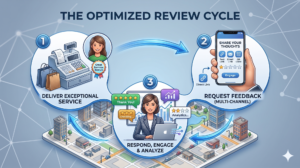
Humans rely on reviews to avoid buyer’s remorse. But algorithms? They use them as a massive ranking lever for the Local Pack. Google’s goal is simple: serve up the cream of the crop. If you’re sitting pretty at 4.9 stars with 150 glowing reviews, and your rival is hovering at a dismal 3.2 with barely a dozen, who wins? You do. But a stellar reputation doesn’t happen by accident. It takes hustle.
Build a foolproof review-catching machine. Ping a polite text or drop an email right after a killer transaction. Give them a direct, frictionless link. Make it stupid-easy. And here’s the real kicker: reply to them all. Every. Single. One. Gush over the happy folks. Handle the grumpy ones with grace and empathy. It proves to both the bots and future patrons that a living, breathing, caring human is running the show.
Reviews are the new digital word-of-mouth. Google treats them as a primary trust signal, meaning a consistent stream of authentic, positive reviews will do more for your local visibility than almost any technical tweak.
4. Create Hyper-Local Content on Your Website
Your Google profile is undeniably huge, but don’t neglect your actual website. It still dictates whether you crack the Map Pack. We consistently notice that brands churning out hyper-localized content enjoy a serious ranking bump. Want to dominate the Chicago market? Your website needs to scream “Chicago” from the rooftops.
Juggling multiple service areas? Build dedicated pages for every single town. On these specific landing pages, spotlight the exact services you offer there. Name-drop local landmarks. Maybe even slap up a glowing testimonial from a resident in that specific zip code. Better yet, blog about neighborhood events, community drives, or local sponsorships. It’s a giant neon sign to Google declaring, “We belong to this community!”
5. Build High-Quality Local Citations
A citation is just a fancy term for any online mention of your NAP. We already hammered home the importance of consistency, but volume and quality are equally vital. Think of citations as digital popularity votes. When highly respected websites publish your details, Google’s local algorithm sits up and takes notice.
Naturally, you hit the heavyweights first: data aggregators, Yelp, Bing Places, Apple Maps, the BBB. Standard stuff. But the real competitive edge? Micro-local directories. Snag a spot on the local Chamber of Commerce site. Join regional business groups. Getting featured on a highly specific, city-run directory carries wild algorithmic weight because it firmly anchors your entity to that exact geographic coordinate.
6. Earn Local Backlinks to Boost Authority
Traditional SEO worships gtraffio.com/" class="gsap-auto-link">backlinks (other sites linking to yours). Local SEO is no different, but there’s a twist. We crave local links. Snagging a backlink from Forbes is cool and all, but a link from your tiny town’s weekly newspaper or the bakery down the street? For Map Pack dominance, that’s absolute dynamite.
How do you actually get them? Get your hands dirty in the community. Sponsor a ragtag little league squad. Cut a check for a local charity run. Offer a modest scholarship to the nearby high school. Usually, these groups will throw a “Thank You to Our Sponsors” link on their site. Alternatively, team up with non-competing neighbors to cross-promote. These grassroots links whisper to Google that your business is a pillar of the local ecosystem.
7. Optimize for Mobile and Voice Search
Let’s face facts. People are searching while walking the dog, sitting in traffic, or waiting in line. If someone wants a “pizza place open now,” they’re whipping out an iPhone or yelling at Alexa. Your website absolutely must be slick on mobile. If your homepage takes an agonizing ten seconds to load, or the font requires a magnifying glass, users will bail. Hard. And Google will gleefully tank your rankings in response.
Plus, you have to account for how people talk versus how they type. Voice queries are chatty. Rambling, even. Nobody says “auto repair Denver” to Siri. They ask, “Hey, where’s the closest mechanic to me?” To snatch up this conversational traffic, weave natural, long-tail phrases into your copy and FAQs. Answer the exact questions people are blurting out loud.
8. Implement Local Schema Markup
Don’t let the tech jargon scare you off. Stick with me. This is a clandestine weapon your competitors are almost certainly ignoring. Schema markup (or structured data) is essentially a chunk of code that spoon-feeds search engines. It translates your site into their native tongue. It boldly states, “Hey bot! Here is our official name, our exact GPS coordinates, our business hours, and our phone number.”
By injecting “LocalBusiness” schema into your site, you eliminate Google’s need to guess. And no, you don’t need a computer science degree. The web is overflowing with free schema generators. You just punch in your info, copy the generated script, and paste it into your site’s header. Boom. It’s a tiny, under-the-hood tweak that floods search engines with clarity.
9. Utilize Google Business Profile Posts and Updates
Far too many owners treat their Google Profile like a billboard on a deserted highway. They erect it once and drive away forever. Let me let you in on a secret: treating it like a bustling social media feed works wonders. Google actually has a built-in “Posts” feature. It lets you flash updates, discounts, and fresh inventory directly on the search results page.
Aim for one post a week. Run a café? Show off a mouth-watering shot of the weekend roast. Retail shop? Hype up your Black Friday blowout. It keeps your digital storefront looking vibrant. Sure, Google hasn’t officially confessed that posting boosts rankings. But it undeniably spikes clicks, eyeballs, and conversions. And those juicy behavioral metrics? They tell Google you’re the hottest ticket in town.
10. Pre-Populate and Manage Your Q&A Section
Finally, let’s tackle the Q&A section – a bizarrely ignored corner of the Google Business Profile. Here’s the terrifying part: literally anyone can ask a question, and anyone can answer it. I’ve witnessed absolute trainwrecks where a hot lead asks a valid question, only for some random internet troll to reply with total nonsense.
Don’t just sit back and let chaos reign. Go on the offensive. You can actually log in and ask questions yourself. Post the stuff you hear every single day. “Do you guys have parking?” or “Are the pastries vegan?” Then, swoop in and answer them from your official owner account. It’s brilliant customer service, it controls your brand’s narrative, and hey—it’s a sneaky way to organically weave more local keywords into your profile.
Frequently Asked Questions
What exactly is the Google Local Pack?
The Google Local Pack (sometimes dubbed the Map Pack or 3-Pack) is that ultra-prominent chunk of real estate at the very top of local search results. It highlights three prime businesses right under a map. Because it aggressively displays reviews, quick-call buttons, and driving directions, snagging a spot here is arguably the most lethal way to funnel local buyers straight to your cash register.
How long does it take to see results and rank in the Local Pack?
SEO is a notoriously slow burn. Patience isn’t just a virtue; it’s a requirement. I regularly remind clients that local search is a marathon. If you’re untangling a messy digital footprint or starting from absolute zero, expect a three- to six-month grind before the needle really moves. But, if you’re just polishing an already decent profile and turning on the review-gathering jets? You might see a glorious spike in mere weeks. Long-term consistency is the real secret.
Do I need a physical storefront to rank in local SEO?
Nope. Not at all. You don’t need a fancy brick-and-mortar shop to win at this game. Service-area businesses (SABs)—think mobile detailers, roofers, or freelance dog walkers—can absolutely crush it in the Local Pack. When you build your profile, just hide your home address. Instead, map out the specific zip codes or counties you serve. Google will gladly index and rank you for those territories.
Are Google reviews really that important for rankings?
Yes. A thousand times, yes. From everything I’ve seen in the trenches, reviews are a colossal ranking lever. Google’s entire reputation relies on recommending fantastic experiences. A relentless influx of fresh, glowing reviews screams to the algorithm that your business is beloved. Plus, when ecstatic customers organically mention things like “best facial in downtown Seattle” in their review text, it feeds the search engine pure keyword gold.