



Welcome! Plunging headfirst into the chaotic, ever-mutating universe of search engine optimization? Then you are intimately familiar with the beast that is link building. Snagging those high-caliber gtraffio.com/" class="gsap-auto-link">backlinks remains a brutally tough nut to crack. Seriously, I get it. You pour sweat, tears, and a whole lot of coffee into a masterpiece of an article, hit publish, and then… absolute silence. Not a single referring domain. Over the years, my crew and I have run the gauntlet of practically every outreach tactic imaginable. Spoiler alert: the game has radically morphed.
Remember the era of blasting a generic, mail-merge template to five hundred random webmasters and reaping a harvest of backlinks? Yeah, those days are dead and buried. Search algorithms are terrifyingly brilliant now. Site owners are exhausted. And audiences? They demand pure, unadulterated value. That is precisely why an uncompromising pivot to white hat link building isn’t just a recommendation – it is a survival mandate. Sidestepping algorithmic doom is a nice perk, sure. But these authentic methods also forge robust brand authority and funnel actual, breathing humans right to your digital doorstep.
So, here is the blueprint. I’m peeling back the curtain on the hyper-advanced, totally legitimate link acquisition maneuvers that are actively yielding fruit for us right now. Forget fluffy, pie-in-the-sky theories. These are gritty, battle-scarred strategies currently locking down placements on intimidatingly authoritative domains. Ready to genuinely move the needle? Let’s plunge into the tactics.
The Evolution of White Hat Link Building

Before we dissect the granular tactics, we need to redefine our terms. What does “white hat” actually signify in today’s ecosystem? Historically, it was a low bar: just don’t buy links and avoid those seedy, underground link farms. Today? The paradigm has shifted entirely. Authentic white hat link building boils down to a fundamental concept: value exchange. You have to conjure up an asset so profoundly useful, irresistibly fascinating, or painstakingly researched that fellow creators feel compelled to cite it.
I have a litmus test. Whenever a fresh link campaign is on the drawing board, I ask myself a single, polarizing question: “If Google vanished tomorrow, would I still covet this link?” If my answer is an enthusiastic yes, because that placement promises to funnel engaged, relevant humans to my site while bolstering brand prestige, then I know I’ve struck gold. Adopting this philosophy completely short-circuits the old ways, radically overhauling our approach to outreach, content ideation, and human connection.
Technique 1: Digital PR and Data-Driven Studies
Gun to my head, if I could only deploy a single tactic for the remainder of my SEO career? Digital PR, supercharged by proprietary data. It’s an absolute juggernaut. Journalists, niche bloggers, and industry pundits are ravenous for fresh statistics to anchor their narratives. Feed them that raw data, and they will instinctively reward you with a coveted, high-authority backlink. It is a symbiotic masterpiece.
The mechanics are straightforward. First, we pinpoint a simmering trend within our specific industry. Next comes the data harvest. And no, you don’t need a Fortune 500 budget to pull this off. I frequently deploy scrappy polling tools to quiz a few hundred respondents, or I’ll go digging through public databases to unearth bizarre correlations. The moment we strike a statistical nerve – perhaps a jarring revelation or a widely held myth utterly dismantled by numbers – we wrap it all up in a sleek, visually digestible report.
Outreach for these data drops feels wonderfully organic. Gone is the awkward begging. Instead, I am casually dropping a newsworthy revelation onto the desk of a reporter who actively covers that exact beat. We are essentially doing their homework for them, serving up a compelling narrative on a silver platter. Consequently? The conversion rates on these pitches are absurdly high.
The era of shotgun-blasting generic link pitches is dead and gone. Today’s most potent link building is virtually indistinguishable from elite digital PR and authentic networking. If your asset doesn’t tangibly upgrade the internet, all the outreach in the world won’t save it.
Technique 2: The Reimagined Skyscraper Technique

You are likely acquainted with the infamous Skyscraper Technique. The classic playbook? Spot an article hoarding backlinks, pen something slightly longer, and then harass everyone linking to the original to swap their link to yours. The foundational logic is sound. However, merely slapping an extra 500 words onto a blog post is a remarkably fast way to get ignored today. To survive the modern web, we had to drastically mutate this strategy.
Length is no longer the holy grail; exponential value is. I fixate heavily on obliterating the competition via user experience and rich media. If the reigning champion on Google is a dreary, monolithic wall of text, my team builds an immersive alternative. We deploy bespoke infographics, embed interactive calculators, shoot punchy video summaries, and weave in exclusive expert soundbites. The goal is uncompromising: our URL must become the undisputed, definitive authority on the subject.
When it is time to hit send on our outreach, we never rely on a lazy “Hey, look, my post is better!” approach. Instead, we surgically highlight the exact, tangible upgrade we brought to the table. A pitch might look like this: “I noticed you linked out to that solid primer on cold email. I actually just published a parallel guide, but I engineered a free, interactive subject-line generator into mine that your audience might get a kick out of.” By shining a spotlight on the shiny new feature, our success rates skyrocket.
Technique 3: Claiming Unlinked Brand Mentions
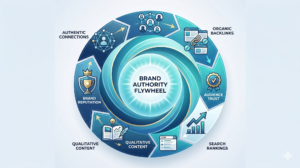
If there is an absolute no-brainer in the link acquisition universe, it is this. As your company’s footprint expands, chatter naturally follows. Bloggers, industry journalists, and forum regulars will start dropping your name. The tragedy? Half the time, they will casually mention your brand or a flagship product without bothering to actually hyperlink back to your domain.
My countermeasure is rigorous automation. I configure an array of alerts tracking our exact brand name, the names of our C-suite executives, and our proprietary tech. Once a week, I sift through the noise to isolate the unlinked mentions. Upon spotting an orphaned shout-out, I fire off an exceptionally brief, ultra-friendly note to the publisher.
Tone is everything here. Nobody likes a demanding stranger. I always open with genuine gratitude for the spotlight and the kind words. From there, I softly pitch the idea that dropping a hyperlink could genuinely benefit their readers who might want to explore further. Think about it: they already favor your brand enough to write about it! Because the friction is so incredibly low, this polite nudge converts at a staggering clip.
Technique 4: Value-Added Broken Link Building
Broken link building is ancient history in SEO years, yet it remains remarkably potent – provided you inject it with a modern twist. The old-school playbook was simple: hunt down a 404 error on a prospect’s site, flag it for the webmaster, and eagerly offer your own URL as the fix. The fatal flaw? Site owners are bombarded with these identical pitches daily. More often than not, they just hit “delete” on the dead link and move on with their lives.
To bypass that apathy, we execute the “Value-Added” maneuver. When I stumble upon a dead link marooned on a juicy, high-authority resource page, I resist the urge to immediately pitch whatever content I currently have laying around. Instead, if that dead link originally led to a phenomenal, deeply researched guide, I fire up the Wayback Machine. I dissect the ghost of that old page. Then? My team completely resurrects it, crafting a vastly superior, modernized iteration of the lost asset.
The subsequent outreach is borderline irresistible. My pitch is hyper-personalized. I give them the heads-up about their dead link, but I quickly pivot, explaining that I recognized how vital that specific resource was to their audience. So much so, in fact, that I took the liberty of engineering a fully updated, 2024-ready replacement. It demonstrates aggressive dedication and hands them an elegant, plug-and-play solution to their rotting link issue.
Technique 5: Strategic Guest Podcasting
While the traditional guest posting circuit has grown bloated, spammy, and perpetually under the microscope of Google’s webspam team, guest podcasting is basking in a golden renaissance. I am fiercely obsessed with this channel. Why? It is the ultimate two-for-one deal. You score a pristine, contextually relevant backlink nestled right in the show notes, while simultaneously beaming your expertise straight into the ears of a captive, hyper-engaged demographic.
The workflow kicks off with a targeted hunt for industry podcasts featuring an interview format. I don’t just blindly pitch; I actually plug in and listen to a few episodes to absorb the host’s unique rhythm and decode the audience’s deepest pain points. Armed with that context, I sculpt a tailored pitch. I usually offer a menu of three distinct, highly specific talking points, explicitly breaking down the actionable gold their listeners will walk away with.
Here is the secret: podcast hosts are perpetually starving for articulate guests who can drop serious knowledge without sounding like a walking infomercial. A meticulously crafted pitch is rarely ignored. Once the audio drops, the host instinctively litters the show notes with links back to your homepage, your Twitter, and any specialized tools you casually name-dropped during the chat. Frankly, these are among the most organic, iron-clad links you could ever hope to acquire.
Technique 6: Creating Definitive Industry Glossaries
If you want a peek at our stealthiest weapon over the last twelve months, look no further than the colossal industry glossary. Every single niche is suffocating under its own weight of jargon, bizarre acronyms, and convoluted terminology. Rookies are frantically Googling these phrases trying to keep their heads above water. Meanwhile, veteran content creators are desperately hunting for authoritative definitions to cite when they drop a heavy piece of jargon.
We construct sprawling, visually stunning glossary hubs. And no, we do not settle for a dry, one-sentence Webster’s definition. For every single entry, we engineer a multi-layered breakdown: a crystal-clear definition, a gritty real-world application, and a succinct summary of why it actually matters. We then weave these entries together with aggressive internal linking, forging a dense, inescapable web of topical authority.
The sheer brilliance of a top-tier glossary lies in its passive magnetism. As bloggers, journalists, and educators churn out content within your ecosystem, they will instinctively route links to your glossary to clarify complex concepts for their own readers. Yes, it demands a grueling upfront investment of blood, sweat, and keystrokes. But once it is live? It mutates into an unstoppable, automated link-generating machine that pays dividends for years.
Technique 7: Resource Page Integration
Let’s talk about resource pages. They exist for one stubbornly simple reason: to funnel users toward incredibly helpful stuff. Site owners painstakingly curate these directories to showcase the absolute best tools, deep-dive guides, and articles their industry has to offer. Because their entire DNA is built on outbound linking, they are magnificent targets for white-hat campaigns – assuming, of course, your asset actually deserves a spot in the VIP section.
We deploy advanced search operators to unearth these hidden directories. Think along the lines of pairing your core keyword with modifiers like “helpful resources,” “useful links,” or “recommended reading.” Once we scrape together a robust hit list, we ruthlessly vet each URL. We need to verify that the page isn’t an abandoned digital graveyard and that the domain actually wields some respectable authority.
When you approach these curators, your outreach must be dripping with respect. I make it a strict rule to call out a specific, existing link on their page that I genuinely enjoyed. It proves I didn’t just scrape their email with a bot. Following that, I gently pitch our asset, explicitly suggesting the exact category where it would fit seamlessly. More crucially, I articulate exactly how it enriches the lives of their readers. If your tool or guide legitimately elevates their curation, webmasters are surprisingly eager to snap it up.
Frequently Asked Questions
How long does it take for white hat link building to show results?
Let me be brutally honest: SEO is a marathon, and legitimate link acquisition tests your patience. After you finally lock down a stellar backlink, the waiting game begins. It can take anywhere from a sluggish few weeks to a couple of agonizing months for crawlers to discover the link, calculate the transferred equity, and recalibrate the SERPs. As a rule of thumb, if you are persistently landing premium placements, you should spot a definitive, upward trajectory in organic traffic within the three-to-six-month window. Keep your eyes on the prize: sustainable, compounding growth always beats flashy, overnight spikes that vanish by Tuesday.
Is guest posting still considered a white hat technique?
Yes—but with a massive, blinking warning label attached. Guest posting remains firmly in the white-hat camp only if your underlying motives are pure. Are you drafting a profoundly insightful, entirely original column for a respected publication in your specific niche? Are you doing it to flaunt your expertise and hijack a new audience? Brilliant. The backlink is just the cherry on top of that value exchange. However, the moment you start sliding cash under the table to sketchy, low-rent blogs that exist purely to launder link equity, you have plummeted into black-hat territory. That game ends in devastating manual penalties. Relevance and uncompromising quality must always be your north stars.
How many backlinks do I actually need to rank on the first page?
I get hit with this question constantly, and the unvarnished truth is frustrating: it depends entirely on who you are fighting. There is no mythical, universal quota. Trying to muscle your way into a fiercely contested keyword dominated by corporate leviathans with thousands of referring domains? You are going to need a gargantuan, pristine link profile to even step into the ring. On the flip side, chasing a hyper-specific, long-tail query? You might snag page one with just a handful of stellar links. Sometimes, if your content is lightyears ahead of the garbage currently ranking, you won’t need a single link. Your best move is to ruthlessly analyze the top five contenders and calculate the precise backlink gap.
What is the main difference between white hat and black hat link building?
The chasm between the two comes down to intent and your willingness to play by the rules. White-hat practitioners obsess over earning links organically. They craft jaw-dropping content, nurture actual human relationships, and market their brands with integrity. The backlinks are merely a byproduct of making the internet a better place. Black-hat operatives? They are obsessed with tricking the algorithm. They rely on dark-arts deception: buying links, burying hidden text, and orchestrating massive, automated link networks. Think of white-hat as a compounding, long-term investment in your digital real estate. Black-hat is a reckless casino bet that almost always ends with a catastrophic manual penalty.
Are “nofollow” links completely useless for SEO?
Absolutely not! Sure, it is a well-known fact that “nofollow” tags act as a dam, stopping the direct flow of raw link equity (the infamous “link juice”) that “dofollow” tags provide. But calling them useless is a massive rookie mistake. For starters, modern search algorithms treat the nofollow attribute more like a subtle hint than a rigid command, using those connections to map out your digital ecosystem. Furthermore, a genuinely healthy backlink profile requires a messy, organic blend of both. A portfolio with zero nofollow links looks suspiciously manufactured. Lastly, a strategically placed nofollow link on a massive, high-traffic publisher can flood your site with targeted referral traffic. That means fresh eyeballs, immediate brand awareness, and incredibly, the potential to naturally attract real dofollow links down the road.